Mulch Calculator
Calculate cubic yards, bag count, and cost for any bed size and mulch type.
Area Dimensions
Quick start
Front Yard Beds
3"
Fresh coverage for common curb-facing beds. Adjust the numbers below for your exact bed.
Natural, decomposes slowly | garden range 2"-3" | $37.5/yd³
Bulk to order
2.04
cubic yards of hardwood mulch at 3" deep, with 10% for edges and spreading already in it.
- Ask the yard for
- 2.25 cu yd
- Bulk material price
- $37.5/yd³
- Bags this replaces
- 28 at 2 cu ft
- Bulk material, before delivery
- $76
Ask for 2.25 cubic yards. That rounds up from the exact estimate so you do not run short at the edges.
A standard pickup bed holds about 2 cubic yards of loose mulch, and wet mulch can exceed payload limits. Check the truck rating before loading.
Material only, at 3" deep with 10% waste included. Delivery, edging, fabric, pre-emergent and labour are all extra. Estimates only, not professional advice.
Last updated June 9, 2026 by our expert review team.
Boot or barrow
Bags or bulk mulch: where the crossover sits for your beds
Bulk orders are usually priced by the cubic yard. Bags are easier for small beds, balconies, and tight access, but the cost per yard climbs fast once the count gets into the dozens. One flat delivery fee is what decides it, so the useful number is not which is cheaper in general, it is the volume where the answer changes hands.
Volume, in cubic yards
Bags cost the same per cubic foot however many you buy. Bulk spreads one flat fee across the load, so it gets cheaper the more you order. The two meet at 3.00 cu yd on a $90 delivery, and your 2.04 cu yd sits below it.
- Bags, 28 at 2 cu ft
- $140
- Bulk, 2.25 cu yd of material
- $84
- Delivery, one flat fee (assumption)
- $90
- Bulk, delivered
- $174
- Bags save
- $34
The saving is not free. Bulk arrives as a pile on the drive, and this load is 10 barrow trips at 6 cu ft a load. Bags come to the bed one at a time and stack in a car boot.
Before the first scoop
Mulch depth, trunk clearance and what to buy
Not a sequence, so not numbered. The first three decide whether the mulch works at all; the rest decide what you put in the boot.
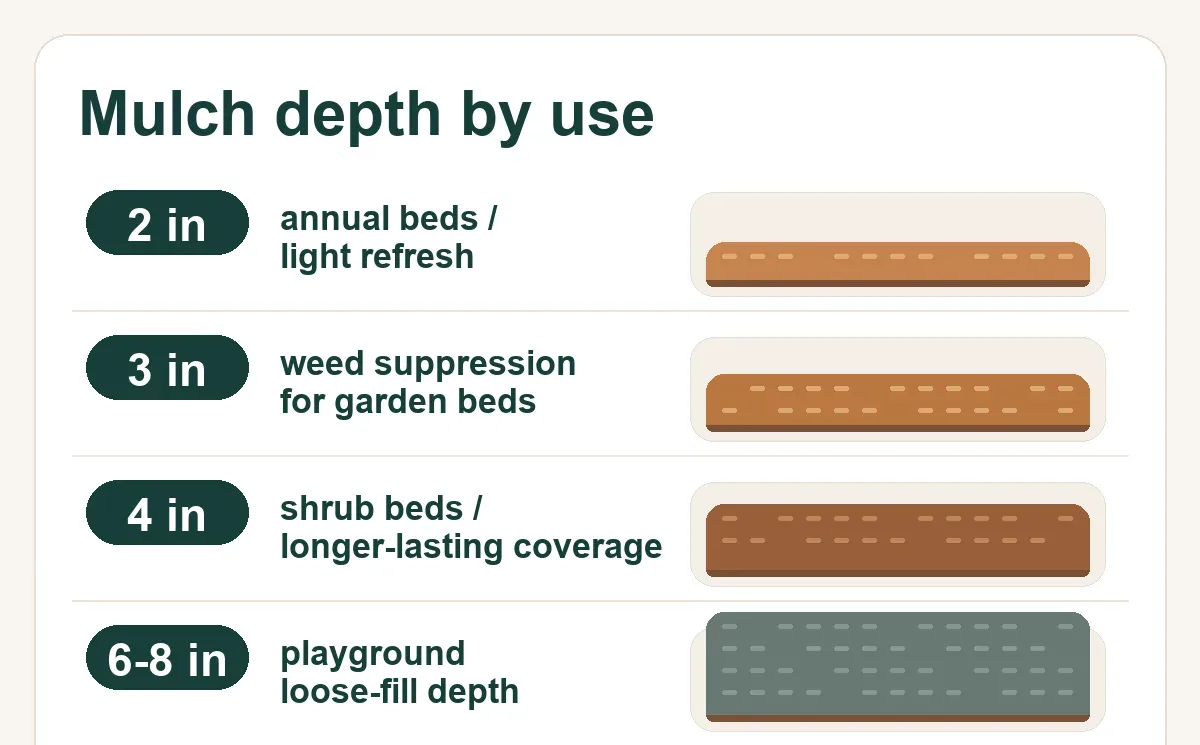
Use 2 to 4 inches for weed suppression. A thin dusting looks fresh for a week, but it will not block much light.
Keep mulch off trunks and stems. Leave 3 to 5 inches around young woody plants and a wider clear ring around mature trees.
Refresh existing beds by measuring the old layer first. Add only enough to bring the total depth back to 2 to 3 inches.
Buy bulk when the project passes 2 to 3 cubic yards or about 30 to 40 standard bags. Delivery fees can still change the winner.
Playground surfacing is different from garden mulch. CPSC guidance starts loose-fill rubber at 8 inches installed and wood mulch at 12 inches installed.
Rubber mulch lasts a long time, but it is not a soil-builder. For play areas, compare dedicated options in the rubber mulch calculator.
For slopes and natural-looking beds, pine straw can stay put better than chunky bark.
Planning a new lawn? Use our sod calculator to estimate pallets and costs for sod installation.
Building raised beds? Our raised bed soil calculator estimates soil mix, bags, and bulk delivery for any bed size.
Need soil under your mulch? Our soil calculator estimates topsoil, garden soil, and compost in cubic yards, tons, and bags.
Depth check
3"
Front Yard Beds
Good landscape depth for weed control, moisture, and root health.
Numbers worth knowing
- 1 cubic yard covers
- ~162 sq ft @ 2"
- Bag size (typical)
- 2 cubic feet
- Recommended depth
- 2-3 inches
- Organic mulch price
- $30-55/yd³
- Rubber mulch price
- $80-120/yd³
Bark or crumb
Choosing a mulch type, and the depth to lay it
Organic mulches improve the soil as they break down. Rubber is a surfacing material, so use it where long wear matters more than soil health. Price follows that split more than it follows looks.
Hardwood Mulchyours
$37.5/yd³
2-3"
1 season
Everyday beds and borders
Can mat if applied too deep
Cedar Mulch
$47.5/yd³
2-3"
2-3 seasons
Tree rings and ornamental beds
Strong scent when fresh
Pine Bark
$42.5/yd³
2-3"
1-2 seasons
Acid-loving plants and natural beds
Large nuggets can float in heavy runoff
Dyed Mulch
$42.5/yd³
2-3"
1-2 seasons
Color-matched front beds
Keep fresh dyed mulch off concrete until dry
Rubber Mulch
$100/yd³
1-2"
10+ seasons
Play areas and permanent borders
Not for edible gardens or soil improvement
Price by type
Mulch price per cubic yard by type
Bulk material only, on the same scale, so the gap between the cheap bark and the rubber is visible rather than stated.
Average bulk material prices before local delivery fees. Bagged mulch often costs 2 to 3 times more per cubic yard, which is the whole reason the crossover above exists.
Volcano watch
Mulch mistakes: volcanoes, mats and floating bark
Four of these cost plants and one costs money. All five are ordinary enough that most beds on most streets have at least one of them.
The 'mulch volcano' around trees
Pull mulch back 3-6 inches from trunks. Piling it against bark traps moisture and invites rot and rodent damage.
Applying too deep
More than 4 inches creates a water-repelling mat. Roots grow into the mulch instead of soil. Stick to 2-3 inches.
Using the wrong mulch for the spot
Pine bark floats (bad for slopes). Cocoa mulch is toxic to dogs. Dyed mulch bleeds onto concrete. Match type to conditions.
Mulching over old mulch without checking depth
Rake existing mulch first and measure depth. Only add enough to bring total back to 2-3 inches.
Reading the per-yard price and forgetting the delivery
A flat delivery fee lands on the small order hardest. Compare the delivered total against the bag total, which is what the crossover above does.
Depth ladder
Mulch coverage per cubic yard, by depth
One cubic yard of mulch covers about 162 sq ft at 2 inches deep, or 108 sq ft at 3 inches. Every row below moves with the bag size you picked in the calculator.
Bag counts are for the 2 cu ft bag and always round up, because a part bag still has to be bought.
Four priced jobs
Mulch by the job: a mailbox bed, front beds, a tree ring, a play area
Each one runs through the same arithmetic as the calculator above, so typing the dimensions in reproduces these figures exactly. Bag counts use the 2 cu ft bag.
Small Flower Bed
8 x 4 ft, 2" deep
- Volume
- 0.22 yd³
- Bags
- 3
- Bulk material
- $7 to $12
Bags usually make sense here. Measure the old mulch first if this is only a seasonal refresh.
Front Yard Flower Beds
20 x 10 ft, 3" deep
- Volume
- 2.04 yd³
- Bags
- 28
- Bulk material
- $61 to $112
This is the point where a bulk quote is worth a call. Ask about delivery minimums and where the truck can dump.
Tree Ring
4 ft radius, 2" deep
- Volume
- 0.34 yd³
- Bags
- 5
- Bulk material
- $10 to $19
Keep mulch clear of the trunk and root flare. A wide, shallow ring is better than a thick mound.
Rubber Play Area
15 x 20 ft, 8" deep
- Volume
- 8.52 yd³
- Bags
- 115
- Bulk material
- $852
Loose-fill playground surfaces need containment, drainage, and maintenance. Use tested surfacing, not random landscape mulch.
Bulk material windows use the $30 to $55 per cubic yard organic range, except the play area, which is priced as rubber. Delivery is not in these figures.
At the counter
Mulch questions: depth, bags per yard, and what is safe
Nine answers in the order they tend to come up, starting with the two the calculator above exists to settle.
How much mulch do I need?
Multiply area by depth, convert to cubic feet, then divide by 27 for cubic yards. Add 10% for curved beds and spreading loss.
How many bags of mulch in a yard?
One cubic yard is 27 cubic feet. That is 14 standard 2 cu ft bags or 9 large 3 cu ft bags.
How deep should mulch be?
For most landscape beds, 2 to 4 inches is the useful range. Refresh layers are thinner. Playground surfacing needs separate safety guidance.
Bulk or bagged, which is cheaper?
Bulk is cheaper on material: $30-55/yard against $54-81 at bag prices. Break-even is around 3 cubic yards once a delivery fee is added.
Does the bag size change whether bulk is cheaper?
Yes. At $5 a bag, 1.5 cu ft bags work out at $3.33 a cubic foot and 3 cu ft bags at $1.67, so on a $90 delivery the crossover against bulk hardwood moves from under 2 cubic yards to about 12.
How often should I replace mulch?
Hardwood and pine bark need annual top-up. Cedar lasts 2-3 years. Rubber mulch is essentially permanent.
Is cocoa mulch safe for dogs?
No. It contains theobromine, the same toxin in chocolate. Use cedar, pine bark, or rubber mulch if you have pets.
What type of mulch is best?
Hardwood ($30-45/yard) is the best all-rounder. Cedar adds insect resistance. Pine bark suits acid-loving plants. Use tested rubber surfacing for play areas.
Does mulch attract termites?
Mulch does not create termites, but it can hold moisture near wood. Keep wood mulch 6 or more inches back from foundations and siding.
What it counts
What this mulch calculator counts, and what it leaves to your yard
Measure the bed, choose a depth, and the calculator converts the volume into cubic yards for bulk orders and bags for store pickup.
Length × Width × (Depth ÷ 12) = cubic feetπ × Radius² × (Depth ÷ 12) = cubic feetCubic feet × (1 + waste) ÷ 27 = cubic yardsCubic feet ÷ bag size = bags, rounded upThe waste factor covers curved edges, settling, and the small losses that happen while moving mulch by wheelbarrow. Use more waste for slopes and play surfaces.
The cost comparison is a planning number. Local delivery fees, seasonal bag sales, and minimum bulk orders can change the final choice, which is why the delivery fee in the crossover is a control rather than a fixed figure.
Bed area, from dimensions or a figure you enter
Delivery, and any minimum order your yard sets
Depth, and the waste allowance you set
Edging, landscape fabric, pins and pre-emergent
Bulk volume, rounded up to a quarter yard
Bag sales, seasonal pricing and loyalty discounts
Bag count at your chosen bag size
Labour, tool hire and skip or spoil removal
Disclaimer
These estimates are for planning purposes only. Actual costs vary by location, material availability, and project complexity. Always get at least 3 local quotes. This calculator does not replace professional advice.
Sources
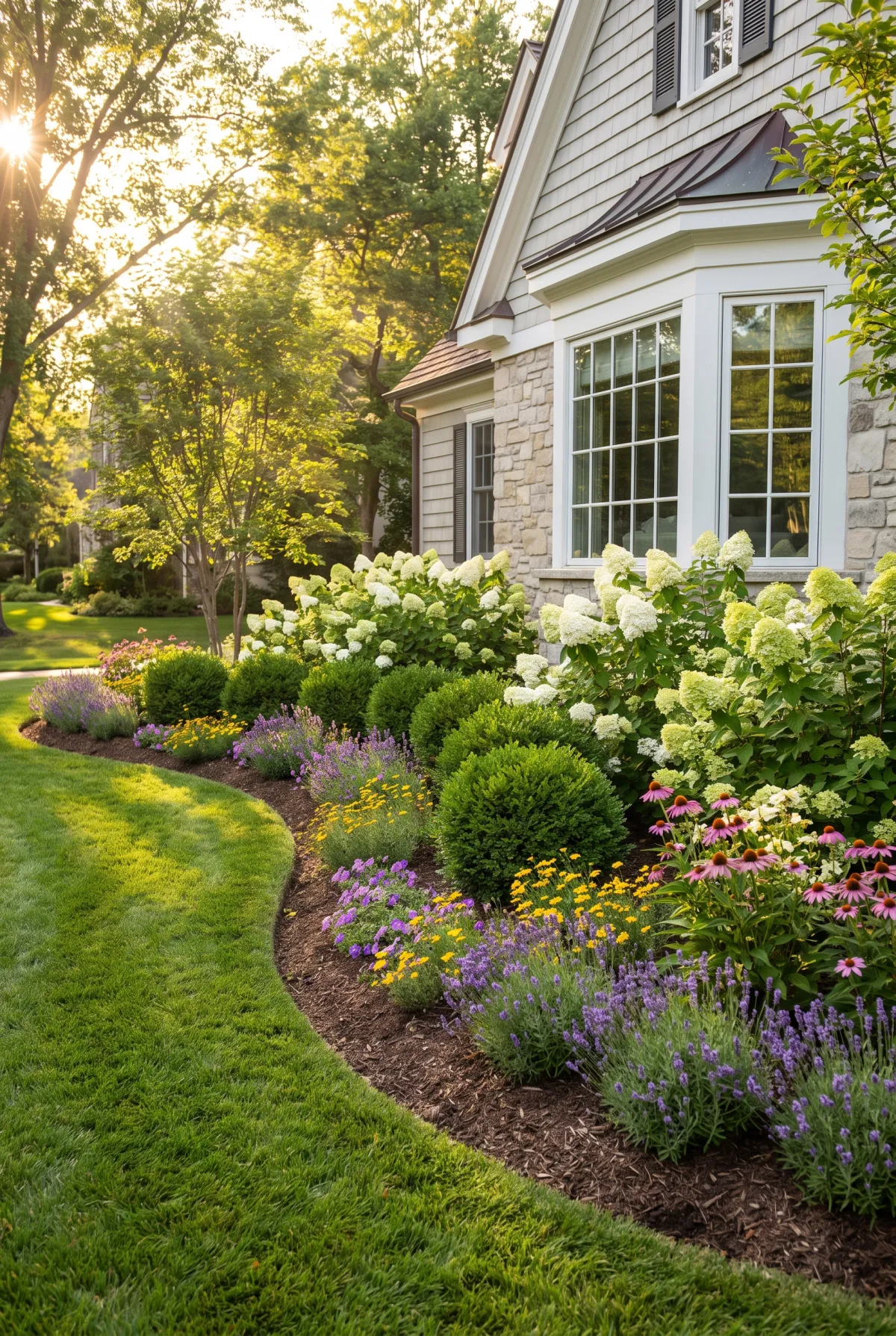
See 13 garden bed & mulch ideas
Browse the looks, then price yours here.