Soil Calculator
Estimate soil cubic yards, tons, bags, and bulk cost for lawns, beds, and fill areas.
Project Details
Project preset
New lawn
4" typical
4 inches of workable topsoil before seed or sod.
Length (ft)
Width (ft)
Depth (inches)
Material
Screened topsoil
Best for lawn prep, planting areas, and the final layer over fill dirt.
10% for settling and uneven edges
Estimates only. Not professional advice.
Bulk soil to order
2.72
cubic yards of soil
Screened topsoil over 200 sq ft at 4 in, with a 10% settling allowance included.
- Loose volume
- 73.3 cu ft
- Bulk rate for topsoil
- $20 - $40 / yd³
- Bagged instead
- $222 - $370
- Bulk soil delivered
- $54 - $109
Depth is doing most of the work in that figure. See what the other depths cost for the same footprint.
Last updated August 5, 2026 by our expert review team.
Order errors
Where a soil order goes wrong, and it is nearly always the depth
Area is the part everybody measures. Depth is the part people guess, and it is the one the volume follows, so a guess one step out is a bill several times over.
Guessing the depth instead of reading it off the job
Volume scales straight off depth. Nothing else on the order form moves the total this hard.
Take the depth from what the soil is for. Across the depths below, one footprint swings by about 40 times.
Using topsoil as structural fill
Topsoil is too valuable and too organic for deep grade changes, and it keeps settling under load.
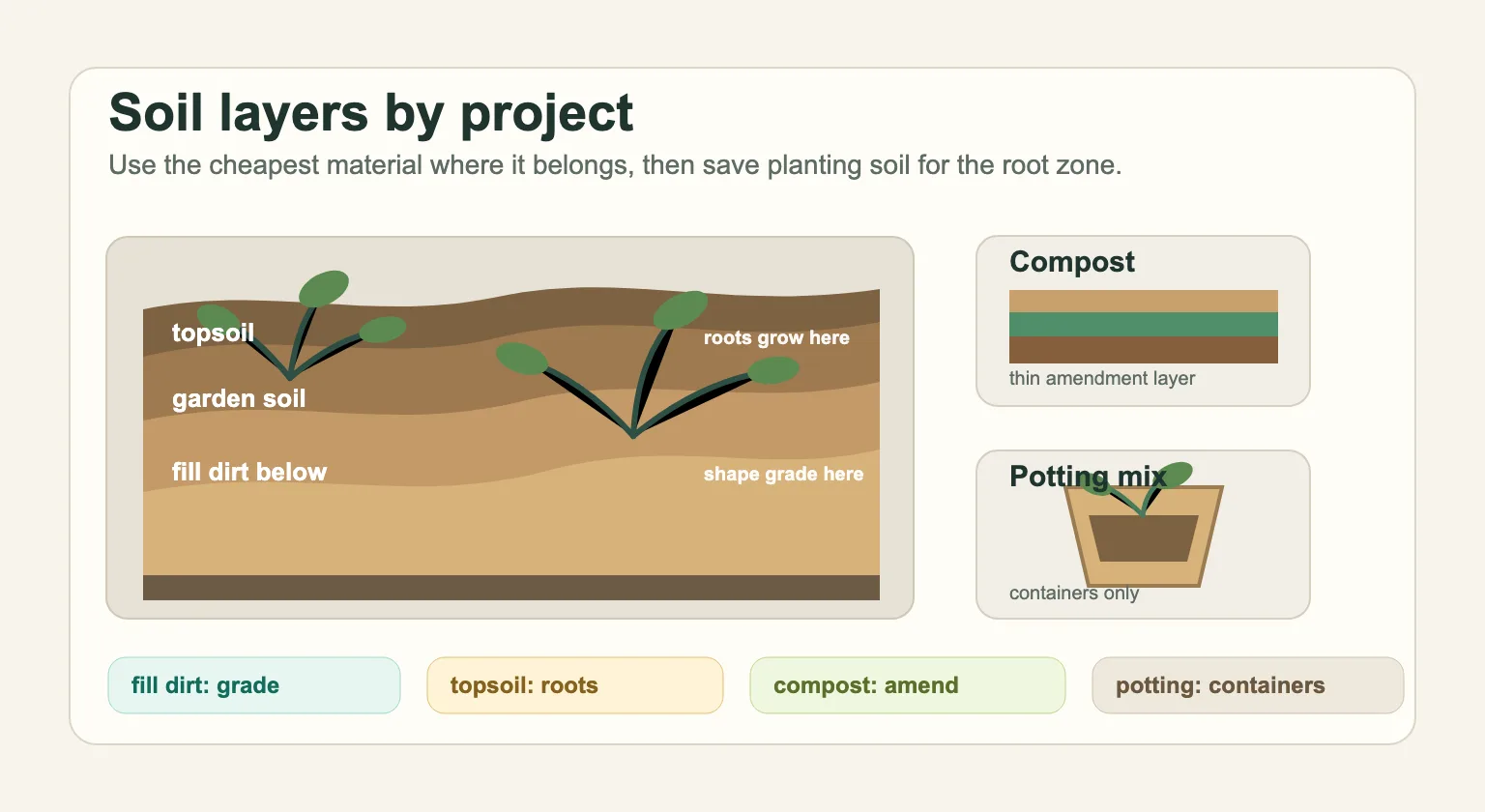
Build the grade in fill dirt and keep topsoil for the planting layer on top.
Spreading compost at soil depth
Compost is an amendment. At a bed depth it stops being a topdress and starts smothering turf.
Keep a lawn topdress at the 0.25" the preset carries, and blend compost into deeper work instead of laying it thick.
Ordering to the truck instead of the measurement
A round number of loads is easy to buy and awkward to spread, and the surplus ends up as a thicker layer than planned.
Order the volume you measured. Suppliers sell part loads, and a thicker layer is not a free upgrade.
Forgetting that loose soil settles
Material arrives fluffed up and loses height after watering and foot traffic, so a level-full order finishes low.
Leave the settling allowance in. The slider defaults to 10% and this order is running at 10%.
Section view
Your soil layer in section, at the depth you entered
A depth is easy to read and hard to picture. This is the same layer in section, measured off the ruler at the left, with the other depths in the preset list dashed in on one scale.
Both axes share one scale, so the layer's shape is true. The dashed lines are the other depths this preset list carries.
Depth ladder
Every depth this soil could go in, priced for your own footprint
Same ground, same material, same settling allowance. Only the depth changes, and it changes everything, because volume is linear in depth and so is the bill.
| Depth | What it is for | Volume yd³ | Against the deepest | Bulk cost | vs yours |
|---|---|---|---|---|---|
| 0.25 in | Lawn topdress | 0.17 | $3 - $7 | -$76 | |
| 4 inyours | New lawn | 2.72 | $54 - $109 | your depth | |
| 6 in | Garden bed, Low spot fill | 4.07 | $81 - $163 | +$41 | |
| 10 in | Planter fill | 6.79 | $136 - $272 | +$123 |
Costs are the midpoint difference against your own depth, at the bulk rate this calculator carries for screened topsoil. Bags follow the same curve.
Across this list one footprint swings about 40 times over, from 0.25 in to 10 in. No other input on the form is worth that much.
Layer order
Fill dirt below, topsoil above: which soil each layer needs
Depth decides how much. What the layer is doing decides which material, and the two are linked: the deeper the layer, the more the material choice costs you.
Screened topsoil
your material
Best for lawn prep, planting areas, and the final layer over fill dirt.
1.10
$20 - $401 cu ft bags at $3 - $5
Garden soil
A richer blend for flower beds and in-ground vegetable gardens.
1.00
$30 - $551.5 cu ft bags at $4 - $7
Compost
Use as an amendment or light topdress, not as the full soil layer.
0.60
$25 - $501 cu ft bags at $4 - $8
Potting mix
Made for containers. It drains faster than yard soil and raised-bed blends.
0.40
$45 - $852 cu ft bags at $6 - $11
Fill dirt
Use for raising grade and filling low areas, then cap with topsoil.
1.30
$10 - $251 cu ft bags at $3 - $5
Weights and rates are the values this calculator uses for its own estimate. Bag prices are per bag at the size each material is usually sold in.
Spreading
Getting soil onto the ground without paying for depth twice
None of these change the arithmetic. All of them decide whether the layer you ordered is the layer you end up with.
Depth is set by the job, not by taste. A topdress wants a whisker, a seedbed wants a real layer, and a planter wants the deepest layer on the list, so read the depth off the work before you price anything.
Use fill dirt for bulk grade changes, then reserve topsoil for the top planting layer. Deep fill in topsoil is money spent below the roots.
For raised beds, blend topsoil with compost instead of filling the whole bed with bagged garden soil. The raised bed soil calculator handles mix ratios.
After soil is spread, protect beds with mulch. It slows crusting and helps new plantings stay evenly moist.
Use sand or gravel for drainage layers. Do not use topsoil where water needs to move freely.
Test soil before heavy compost or fertilizer use. Too much phosphorus can be a real garden problem, even when the material is organic.
Spread and rake to a depth you can check. A stake marked at the target depth beats eyeballing a load once it is off the truck.
Order the depth you measured, not the depth that fills the truck. A part load costs less than a layer you have to shovel back off.
Four jobs
Four soil jobs, from a thin topdress to a low spot
The topdress covers five times the ground the new lawn does and still takes only 0.85 yd³ against the lawn's 2.72 yd³. Its layer is one sixteenth as thick, and that is the whole story.
40 × 25 ft at 0.25"
0.85
yd³ · 23 bags · $21-$42
Thin compost topdress
A whole front lawn, and still the smallest order on this list. Depth is why.
12 × 4 ft at 4"
0.65
yd³ · 12 bags · $20-$36
Flower bed refresh
A small footprint at a planting depth. Sixteen times the layer, a fraction of the area.
20 × 10 ft at 4"
2.72
yd³ · 74 bags · $54-$109
New lawn before seed
The same depth as the bed above, over four times the ground.
20 × 8 ft at 6"
3.26
yd³ · 88 bags · $33-$81
Low spot before sod
Cheapest material on the page, deepest layer here, and still not the priciest job.
Each job states its own footprint, depth and material: compost, garden soil, screened topsoil, fill dirt. Quantities run at the calculator's 10% default settling allowance, and bag counts use each material's own bag size.
Before you order
Soil answers: depth, weight, bag counts and what to buy
Nine questions the yard hears every spring, answered against the same figures this calculator runs on.
How much soil do I need?
Multiply length by width by depth, then convert to cubic yards. The calculator adds your waste factor before showing bulk yards, tons, and bag counts.
How much dirt do I need?
For fill dirt, measure the low area, multiply length by width by fill depth, then add 10% to 15% for settling and grading. Use topsoil only for the planting layer.
How deep should topsoil be for a lawn?
For a new lawn, 4 to 6 inches of good topsoil is a common planning range. Existing soil quality can change that number.
What is the difference between topsoil and fill dirt?
Fill dirt is for raising grade and filling low spots. Topsoil is the final planting layer where roots, seed, or sod need organic matter.
When should I buy bags instead of bulk?
Bags are tidy for small jobs under about 1 cubic yard. Bulk is usually better once the count gets into dozens of bags.
Can I use compost as soil?
Use compost as an amendment or topdress. For most beds, blend it with mineral soil rather than using compost alone.
How many bags are in a cubic yard?
One cubic yard is 27 cubic feet. That means 27 one-cubic-foot bags, or about 14 two-cubic-foot bags, before waste.
How much does a cubic yard of topsoil weigh?
Screened topsoil is often estimated around 1.1 tons per cubic yard, but moisture and texture can move that number.
Is potting mix the same as garden soil?
No. Potting mix is lighter and drains quickly in containers. In-ground beds need mineral soil plus organic matter.
Coverage
How far one cubic yard of soil goes at each depth
The ladder above fixes the ground and lets the volume move. This does the opposite: one fixed load, and depth decides how much ground it covers. At 4 in it reaches about 81 sq ft.
| Depth | Typical job | 1 yd³ covers | 2 cu ft bag covers |
|---|---|---|---|
| 0.25 in | Compost topdress | 1,296 sq ft | 96 sq ft |
| 1 in | Light leveling | 324 sq ft | 24 sq ft |
| 4 innearest yours | Lawn prep | 81 sq ft | 6 sq ft |
| 6 in | Garden beds | 54 sq ft | 4 sq ft |
| 12 in | Deep planting | 27 sq ft | 2 sq ft |
Coverage is before any settling allowance, so the readout above will always want a little more than these rows suggest.
Depth arithmetic
Depth, footprint and allowance: the arithmetic behind your soil volume
Depth arrives in inches and volume leaves in cubic yards, so the real work is a division by twelve and a division by twenty-seven. Everything after that is a rate.
cu ft = L × W × (depth in ÷ 12) × (1 + allowance)yd³ = cu ft ÷ 27tons = yd³ × densitybags = ⌈cu ft ÷ bag size⌉loads = ⌈yd³ ÷ 5⌉In the number
- The footprint you entered, as a plain rectangle.
- The layer depth, converted to feet before the multiplication.
- Your settling allowance, applied to the loose volume rather than the finished depth.
- The material's own weight and bulk rate, which is why the weight and the cost both move when you change materials.
Not in the number
- Compaction under traffic, which is deeper than the settling allowance covers.
- Delivery, spreading labour and any minimum order your supplier sets.
- Slopes, curves and stepped beds: measure those in sections and add the results.
- What the soil needs mixed into it, which a soil test answers and this page does not.
Delivery loads assume the 5 yd³ load size this calculator uses. Ask your own yard what a load actually holds.
Disclaimer
These estimates are for planning purposes only. Actual costs vary by location, material availability, and project complexity. Always get at least 3 local quotes. This calculator does not replace professional advice.
Sources